
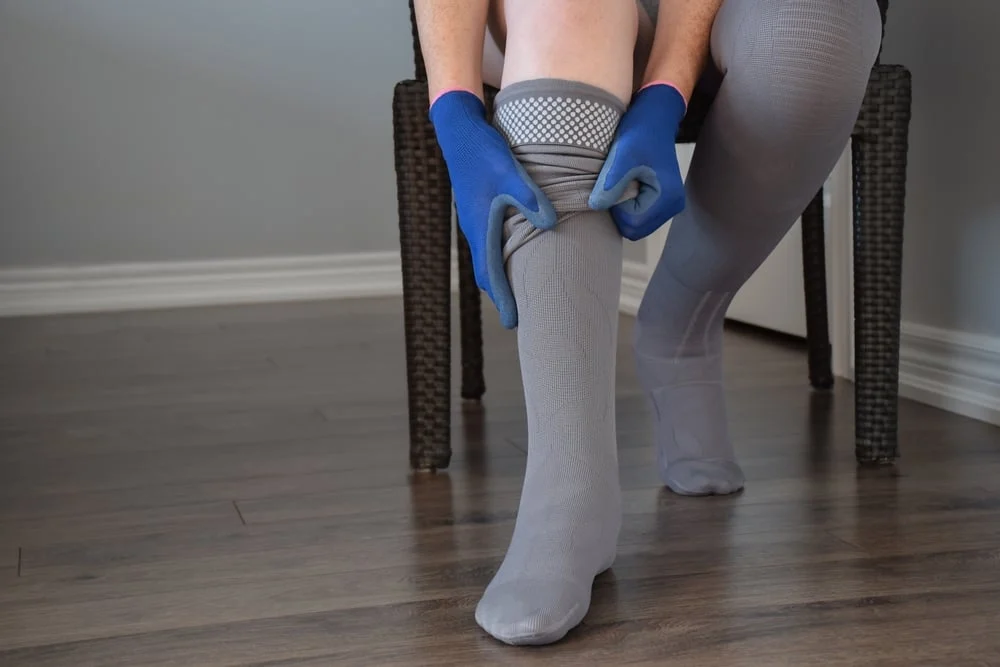
Have you ever spent ten minutes wrestling with a tight pair of compression stockings, wondering if all this daily effort actually heals your legs? If you rely on these garments to survive the afternoon without throbbing pain, you are certainly not alone. As I often observe in my practice, patients frequently ask me whether these stockings genuinely fix their circulation problems or merely mask the symptoms.
It is a fantastic question, one that deserves a straightforward answer. Let me guide you through exactly how compression stockings work, what they cannot do, and when you should seek expert-led care.
Key Takeaways
- Compression stockings act as an effective symptom manager, but they do not reverse your underlying vein condition.
- Vein disease progresses naturally over time, even if you wear your stockings faithfully every single day.
- Vein reflux results in trapped blood, causing inflammation and triggering unexpected symptoms such as profound fatigue, restless legs, and heavy ankles.
- Most health insurance plans require a documented trial of compression stockings before they approve minimally invasive solutions.
- You can suffer from severe circulation issues without ever seeing a single visible varicose vein on your skin.
- A free vein screening helps our team create tailored treatment plans that restore your health and improve your leg appearance.
Compression Stockings: Managing Symptoms vs. Treating the Cause
The simple truth is this: compression stockings manage your daily symptoms. They do not treat the actual condition.
That being said, I certainly do not dismiss the value of compression. These garments genuinely help, and often provide dramatic relief from daily aches. However, no non-procedural treatment exists that magically heals a failing vein. Elevating your legs, taking supplements, and wearing stockings can help you feel better temporarily, but not cure the underlying issue.
Compression gently squeezes your legs to reduce internal pressure and localized inflammation. When you reduce that inflammation, you feel significantly better. That relief holds incredible value, but it does not represent a cure. To understand why, it’s helpful to first understand what happens in your legs when you have a vein condition.
Why Compression Stockings: How Do They Help?
Healthy leg veins contain tiny, one-way valves. These valves open to push blood upward toward your heart, and they close tightly to help keep the blood moving back up your legs, against gravity, where it returns to the heart. When you develop a vein condition, these fragile valves fail.
These valves can weaken and widen. When that happens, blood flows backward and pools in your lower legs. This is called vein reflux. The pooling of blood in the lower legs increases pressure, which often triggers an intense inflammatory response in the surrounding tissues. This hidden inflammation acts as the engine driving nearly every frustrating symptom you experience.
We frequently see patients dealing with symptoms of vein reflux, though they often don’t realize their veins are the cause: heavy legs, throbbing, painful cramping, ankle swelling, restless legs, fatigue, and more. Some patients, but not all, develop visible signs such as spider veins, varicose veins, or skin stains. Furthermore, these symptoms almost always worsen in the evening. If your legs feel fine at breakfast but ache miserably by dinnertime, you show a classic sign of vein reflux.

My Personal Journey with Compression Stockings
My passion for helping patients with vein reflux is not just clinical, it’s personal. I understand exactly how you feel. During my time in medical school, a specialist diagnosed me with a vein condition. I wore compression stockings every day for about 25 years.
I wore them because my legs throbbed and ached terribly by the afternoon whenever I skipped them. Without that support, I dragged myself through the rest of my shifts. The stockings made a real, tangible difference in my life, and for a long time, they provided some relief. I followed the exact same approach I now recommend to my patients. I started with a lightweight compression garment and gradually increased the strength as my symptoms demanded more support.
However, vein disease always progresses. Each year, the condition advances, regardless of whether you do everything perfectly. Eventually, I reached a point where even the strongest prescription stockings failed to help. My legs hurt constantly, and my energy plummeted.
Finally, I did exactly what I told my patients to do. I sought expert-led care. The relief felt immediate and significant. My energy returned, the deep aching vanished, and I stopped dreading the evenings. I share this personal story because I lived on both sides of this issue. You will eventually reach a point where stockings no longer offer the right solution, and you deserve to know that better options exist.
The Progressive Nature of a Vein Condition
I cannot emphasize this fact enough: vein conditions consistently worsen over time. They do not plateau, and your body will not spontaneously heal faulty valves. Compression stockings do not slow down this natural progression. They simply make your current stage of the disease much more tolerable.
Because of this progression, you deeply benefit from scheduling a baseline evaluation. When you catch and treat vein disease early, you enjoy better outcomes and experience far less severe symptoms. If you wait until your stockings completely stop working, you let the condition progress much further than necessary.
This timeline looks different for every woman. Some patients rely on stockings for just a few years before seeking minimally invasive solutions. Others manage for decades. A small minority of people never achieve adequate relief from stockings. If your stockings fail to help you, you gain valuable information about the severity of your condition.

Navigating Insurance Requirements for Compression Stockings
You might wonder why we prescribe stockings if they do not fix the problem. We face a practical reason to give compression wear a genuine try. Most health insurance plans require documentation of a compression stocking trial before they approve advanced vein procedures.
Insurance companies usually enforce a standard, conservative, management-first protocol. Depending on your specific plan, this trial period ranges from several weeks to three months. This requirement does not mean your insurance company wants to make your life difficult; they simply want to ensure the proper treatment. Fortunately, you will likely feel much better during this trial period anyway.
If you complete the trial and still need lasting relief, you successfully satisfy the requirement. At Missouri Vein Care, we specialize in insurance-friendly options. We work directly with your insurer to simplify coordination, so you never feel overwhelmed.
If you think you might have a vein condition, contact us for a free screening. We can let you know if reflux is present and help you navigate the specific requirements of your insurance provider.
The Invisible Side of Vein Disease
Many people assume that vein disease always looks a specific way. When you picture circulation problems, you probably imagine large, ropy, bulging varicose veins winding down the back of a calf.
While bulging veins certainly represent one presentation, the reality often looks completely different. The vast majority of people suffering from a vein condition display absolutely no visible symptoms on their skin. You might have zero varicose veins and zero spider veins. Your legs might look perfectly smooth on the surface.
Venous reflux is a deep, internal problem. The damaged valves sit far below the skin. The trapped fluid creates internal inflammation. You feel real, significant symptoms like chronic fatigue, restless legs, itching, and heaviness, but you see nothing from the outside. I strongly encourage you not to self-diagnose purely on aesthetics. If you experience the classic symptoms of vein reflux, you need an expert evaluation to uncover the truth.
Finding Lasting Relief from the Symptoms of a Vein Condition
Where do compression stockings truly belong in your healthcare journey? They serve as an appropriate starting point. If you experience mild symptoms, have recently received a diagnosis, or need to fulfill insurance requirements, you should certainly use them.
However, they do not serve as a permanent, stand-alone solution once your quality of life begins to suffer. Relying on stockings when your legs constantly hurt feels like turning up your car radio to drown out a strange engine noise. You buy yourself a little time, but the engine will not fix itself.
If you live with unexplained fatigue, evening leg aches, or swollen ankles, I invite you to visit us. Schedule a free vein screening to discover what actually happens beneath the surface. Our experts create tailored treatment plans that meet both your health and aesthetic needs. We offer minimally invasive solutions that prioritize your comfort and require a swift recovery. Stop guessing about your leg health, and let us help you step back into a vibrant, active life.

Frequently Asked Questions (FAQs)
Q: Can I wear compression stockings every day without getting treatment?
A: Many people choose to wear stockings daily as a workable long-term strategy. However, because vein disease progresses naturally, most patients find that stockings become much less effective over time. We recommend regular monitoring with our team to ensure your legs remain healthy, even if stockings manage your pain well right now.
Q: What compression strength should I buy first?
A: If you have never worn compression garments, we suggest starting with a lighter strength, such as 15-20 mmHg or 20-30 mmHg. As your symptoms increase, you may need stronger compression. Our experts will evaluate your legs and make a specific recommendation based on your unique condition.
Q: Do compression stockings stop my vein disease from getting worse?
A: No, they do not. You must understand this crucial distinction. Compression stockings manage your daily pain, but they do not stop or slow the actual progression of the disease. The underlying faulty valves continue to worsen over time, regardless of how often you wear your stockings.
Q: My legs look perfectly fine. Could I still have a vein condition?
A: Absolutely. Most people with vein reflux show no visible signs at all. The condition happens deep inside your legs. Symptoms like profound fatigue, heavy legs, restless nights, swelling, and aching often act as your only warning signs. If you feel these symptoms, you should investigate your circulation.
Q: How long must I wear stockings before insurance covers my treatment?
A: The timeline varies depending on your specific insurance plan. Most companies require somewhere between six weeks and three months of documented stocking use. Our team works directly with your provider to clarify these exact requirements and ensure we document your trial properly.
Q: What is the difference between spider veins and varicose veins?
A: Spider veins sit close to the surface of your skin and primarily cause cosmetic concerns. Varicose veins enlarge significantly and often contribute to deep venous insufficiency. However, the most significant health concern involves the underlying reflux. A thorough standing ultrasound screening identifies exactly what is happening beneath the surface, allowing us to treat both the health and appearance of your legs.
Q: Do vein treatments hurt or require a long recovery?
A: Our modern vein treatments utilize minimally invasive solutions designed to keep you entirely comfortable. We perform these quick procedures in our comfortable office setting. Most of our patients experience zero discomfort and return to their normal daily activities the very same day.
Q: When should I stop relying on stockings and pursue medical treatment?
A: You should seek treatment when your quality of life begins to suffer and your stockings no longer provide adequate relief. If you notice your symptoms worsening every year, or if your heavy legs and fatigue keep you from enjoying your favorite activities, it is time to explore a permanent solution.